


AirSculpt® Education
Hip Dips vs. Saddlebags: Exploring Their Differences


Hip dips are natural inward curves just below your waist, where the outer thighs meet the hips, and they're shaped mostly by your pelvis and thigh bones. Saddlebags are outward pockets of fat on the outer thighs, sitting anywhere between the pelvis and the knee. Because one is mostly bone structure and the other is stubborn fat, each calls for a different approach.
What Are Hip Dips?
Hip dips, also called hip divots or violin hips, are indentations on the outside of the upper leg, just below the hip bone. Their technical name is trochanteric depression.
In some people, the skin here is more tightly attached to the leg bone, which helps form the dip. On one person they look like deep hollows, and on another they're barely visible.
The nickname violin hips comes from the violin-like shape they give your legs. If you've noticed this curve on yourself, you're in good company.
What Causes Hip Dips?
Hip dips form mainly because of the shape of your skeleton, which is set by your genes. How muscle and fat sit between your bones plays a smaller, supporting role.
Pelvic and Femur Bone Structure
The largest bone in your pelvis is the ilium, and its top edge, the iliac crest, is the part of your hip that sticks out. Below it sits the greater trochanter, the bony upper end of your femur, or thigh bone. The muscle and fat between these two points almost always curve inward, and that curve is the hip dip.
How deep the dip looks depends on several factors:
- How wide your hips are and how much the iliac crest sticks out
- The size of the greater trochanter
- The distance between your hip socket and the greater trochanter
- The length of the femoral neck, the angled bridge between the ball of your hip joint and the rest of the thigh bone
- How your body distributes fat
- How much muscle you carry
Dips tend to look deeper in people with wider hip bones. A trochanter that slopes downward also makes a noticeable dip more likely.
Genetics
Hip dips mostly come down to your genetic makeup, including your bone structure and how your body spreads out muscle and fat. For many people, genetics places the pelvic bones higher than average, which shapes how fat settles around the hips. Your waist width and buttock size can also make hip dips look more or less noticeable.
Hip dips are usually linked to smaller fat stores in that area, since there's less fat filling the gap.
Hip Dips vs. Saddlebags: What's the Difference?
The quickest way to tell them apart is height and shape: hip dips curve inward higher up, and saddlebags bulge outward just below them. Hip dips sit level with the upper part of your buttocks, while outer thigh fat rests at about the height of your lower buttocks.
| Hip Dips | Saddlebags | |
|---|---|---|
| Shape | Inward indentation below the hip bone | Outward pocket of outer thigh fat |
| Main driver | Bone structure and genetics | Fat storage shaped by hormones and genetics |
| Location | Level with the upper buttocks | Between the pelvis and knee, near the lower buttocks |
| Response to fat loss | Actual dip size stays the same | Fat can shrink with overall fat loss |
A pinch test can help, too. If you can pinch soft fat on your outer thigh, that points to saddlebags.
The two can also affect each other. Removing saddlebag or love handle fat can soften how a hip dip looks by smoothing the area around it, though the dip itself stays the same size.
Are Hip Dips Normal?
Yes, hip dips are completely normal, and there's no medical reason to worry about them. They aren't a deformity, and they don't come with medical complications.
Hip dips don't reflect your health or your body fat percentage. People at a healthy weight have them too, because they depend on bone structure and how high the hips sit in the skeleton.
Social media has put hip dips in the spotlight, though women have noticed them for a long time. Whether you love your curves as they are or want to change their shape, the decision is entirely personal.
Can You Get Rid of Hip Dips With Exercise?
Exercise can soften how hip dips look, but it can't remove them, because no workout changes your bone structure. What it can do is build muscle around the dip for a smoother outline.
This approach tends to work best for people who are fairly slim with a dip caused by bone structure. Strengthening the gluteus medius, the muscle on the outer hip just above the dip, can reduce the overall look of hip dips.
Moves that target these muscles include:
- Squats for the gluteus medius and gluteus maximus
- Lunges, including reverse lunges and Bulgarian split squats
- Side-lying leg raises to isolate the gluteus medius
- Clamshells and banded lateral walks for the outer hip
Many people see first changes after 6 to 8 weeks of consistent training, though results vary with your anatomy. You also can't choose where your body loses fat, so spot-reducing the hips isn't possible.
Strong hips still pay off, since hip-strengthening exercises are associated with less pain and injury. For a full routine, see our guide to hip dip causes, exercises, and treatments.
What Causes Saddlebags, and Can They Be Treated?
Saddlebags are driven mostly by hormones and genetics, and they can be treated. Estrogen naturally directs fat to the hips and thighs, especially during the reproductive years. Your genes also set your body's preferred fat storage pattern, which is why the lower body can feel so stubborn.
Other factors can play a part, including an inactive lifestyle, age-related metabolism changes, and hormonal shifts like PCOS or menopause. In rare cases, lipedema, a condition where fat builds up abnormally in the legs, may be involved.
Outer thigh fat is often hard to reduce with diet and exercise alone. Moves like lateral lunges and side-lying leg lifts can firm and shape the outer thigh, even though they won't burn fat from that exact spot.
When pinchable fat is the concern, fat removal can target saddlebags directly. If the issue is mostly loose skin with little fat, a lift or skin tightening may be a better fit.

Treatment Options
The right treatment depends on which concern you have: a hip dip needs added volume, and saddlebags need fat removed. At AirSculpt®, we offer an option for each, and a consultation can help you figure out which fits your anatomy and goals. Want to see them in action? Browse our individual procedure videos.
AirSculpt® Hip Flip™ for Hip Dips
The Hip Flip™ is a minimally invasive fat transfer that fills hip dips with your own fat. First, we gently remove fat from a donor area, such as the love handles, outer thighs, or arms. A rapidly spinning cannula, a thin tube, plucks fat cell by cell, like berries off a bush, through entry points just two millimeters wide.
The treated fat is then placed between the love handles and upper thighs to fill the dip. You stay fully awake the whole time, with no general anesthesia.
Because only a modest amount of fat is needed, the Hip Flip can work for slimmer patients who don't have enough fat for a full BBL. Most patients are back to their daily routines within one to two days. Compression garments are worn for about three weeks, and most workouts can resume at two weeks.
Some of the transferred fat is naturally reabsorbed, typically around 50 percent, and surgeons plan for this by placing extra. Results are typically complete by about six months and tend to last when your weight stays stable. Swelling, bruising, and some pain are common after a fat transfer. A consultation is a good time to ask your surgeon about the risks and recovery that may apply to you.
Outer Thigh AirSculpt® for Saddlebags
Outer Thigh AirSculpt removes saddlebag fat cell by cell with no scalpel and no stitches, leaving a freckle-sized mark at each entry point. The procedure uses six small entry points, placed on the outer thighs and just under each buttock to keep them discreet.
The fat cells we remove are permanently gone, and if you gain weight later, new fat tends to appear anywhere but the treated area at first. The treated skin is also left tighter, and a Renuvion® skin tightening add-on is available for patients with loose skin.
Most patients are back to light activity in about 48 hours. Plan to wait two to three weeks before serious running. Bruising can range from none to black and blue and usually fades within 2 to 3 weeks.
Traditional liposuction often involves general anesthesia and removes fat manually, with downtime that can last several weeks. AirSculpt carries a risk of bruising, swelling, and pain. Traditional liposuction carries similar risks of bruising, pain, and swelling. Before deciding, it can help to ask your surgeon about the risks and complications tied to your specific procedure.
Combining Both for an Hourglass Silhouette
Combining the Hip Flip with outer thigh fat removal can help sculpt an hourglass shape. Your outer thighs can even serve as the donor area, so fat from your saddlebags helps fill your dips.
Slimming the outer thighs smooths the area around the dip, while the added volume fills the dip itself. Your surgeon can talk through your goals with you beforehand and help plan how much fat to transfer.
Can a BBL Fix Hip Dips?
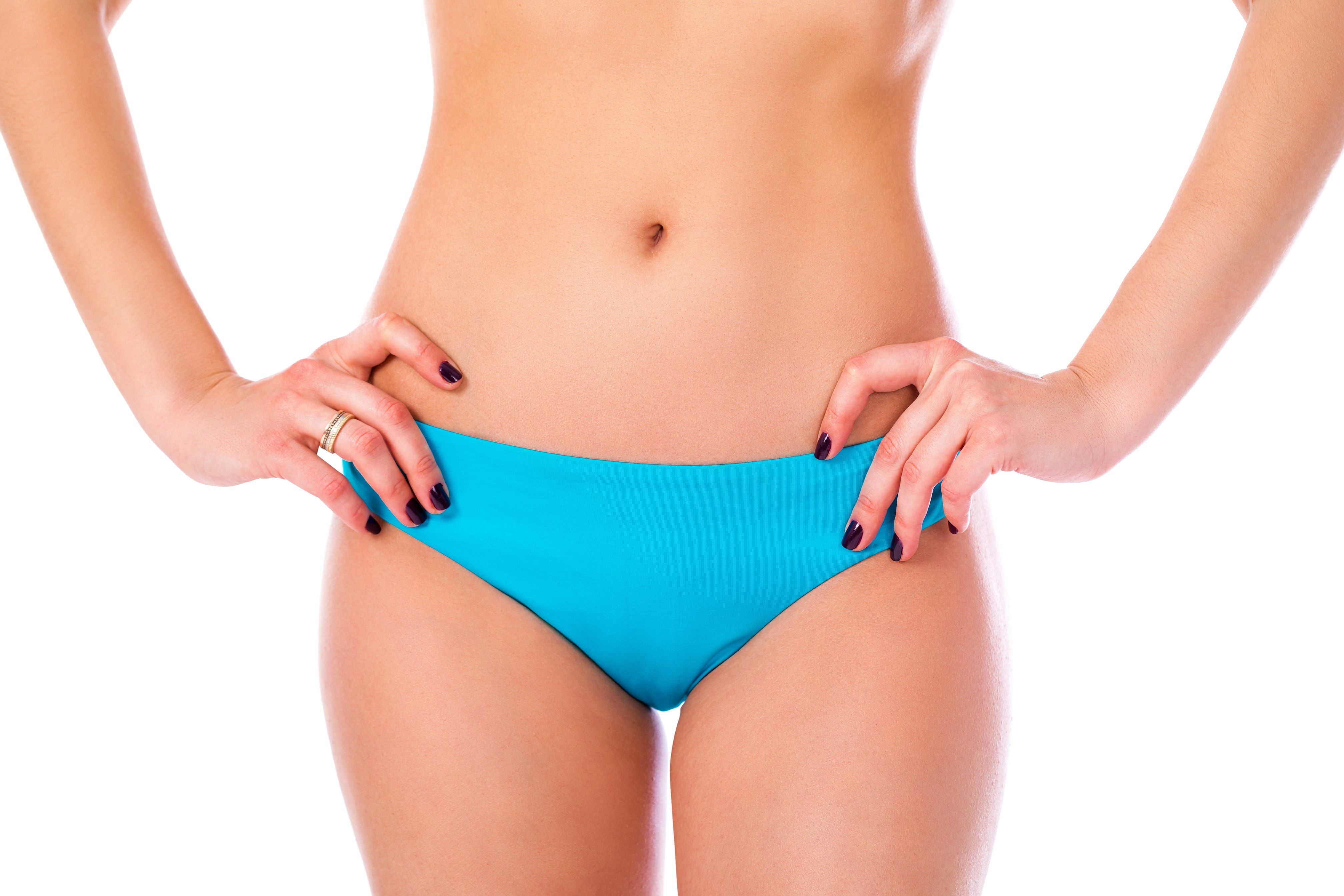
A BBL can help with hip dips, but it's designed mainly to shape and add volume to the buttocks. During a Brazilian butt lift (BBL), a surgeon removes fat from an area like the abdomen, flanks, or thighs and injects it into the buttocks. Because fat can also be placed in the hips, skilled surgeons can customize a BBL to fill hip dips too.
A BBL tends to suit people who want more buttock projection and have enough fat for a larger transfer. If you only want fuller hips, the Hip Flip, which is an alternative to a BBL, is often the better match. Our AirSculpt Power BBL™ and Hip Flip can also be done together or separately.
Recovery can vary quite a bit depending on the technique used. A traditional liposuction-based BBL lasts several hours and uses general anesthesia. Pain, bruising, and swelling are common afterward, and compression garments are part of healing. Strenuous activity should be avoided after a BBL until your surgeon clears you. Patients are also asked to avoid prolonged sitting for about two weeks to protect the fat grafts.
With the Power BBL, there's no general anesthesia and downtime is about two days. Most AirSculpt patients can begin reintroducing intense workouts after about two weeks, once cleared.
Like any surgery, a BBL carries real risks, including blood clots, infection, contour irregularities, and fat embolism, when injected fat enters the bloodstream. Any treatment plan should come from a detailed conversation with your surgeon, including the technique they use.
Hip Dips and Saddlebags FAQs
Can hip dips be removed, or are they just bone structure?
Hip dips are mostly bone structure, so diet and exercise can't remove them, but a fat transfer can fill them in. Building glute muscle may soften how they look. A fat transfer like the Hip Flip places your own fat into the dip for a smoother curve. A consultation can help clarify your specific anatomy and the best approach for you.
How do I know if I have hip dips or saddlebags?
Look at height and shape: hip dips are inward curves level with your upper buttocks, and saddlebags are outward fat level with your lower buttocks. Saddlebags are usually fat you can pinch. Excess saddlebag fat can also make a hip dip look deeper, so some people have a bit of both. A consultation can help you find out for sure.
Does losing weight get rid of hip dips?
Losing weight usually won't get rid of hip dips, because they're shaped by your skeleton. Hip dips are often linked with lower fat stores in that area. If love handle or saddlebag fat is making a dip look deeper, cardio and a calorie deficit may soften its appearance. Even then, the indentation will likely remain.
How does a Brazilian butt lift procedure address hip dips?
A BBL addresses hip dips by placing some of the harvested fat into the hips as well as the buttocks. Surgeons can adjust how much goes to each area, so some patients choose modest buttock projection with more volume in the hips. If your goal is only hip fullness, a Hip Flip uses less fat and focuses on the dip itself. A skilled surgeon can customize the approach to match your goals.
What is the recovery process like after getting a Brazilian butt lift for hip dips?
Recovery after a BBL usually brings pain, bruising, and swelling, and you'll wear compression garments while you heal. Strenuous activity should be avoided until your surgeon clears you. You'll also avoid prolonged sitting for about two weeks to protect the fat grafts. After a traditional BBL, exercise generally resumes after six to eight weeks. With the AirSculpt Power BBL, downtime is about two days. It's worth checking with your surgeon before changing your routine, since guidance can depend on where you are in recovery.
Can I use arm fat for a Hip Flip?
Yes, fat from smaller areas like the arms can be used for a Hip Flip, since it needs less fat than a breast or buttock augmentation. Other common donor areas include the waist, love handles, and outer thighs. Any trouble area with stubborn fat can typically be considered as a donor site, which you can talk through at your consultation.
Ready to Talk to a Specialist?
Whether you're seeing a hip dip, saddlebags, or a little of both, a helpful next step can be talking with a surgeon who can look at your shape in person. Your candidacy is confirmed during a free consultation. Save this hip dips vs. saddlebags guide and bring your questions along. We can't wait to meet you!


